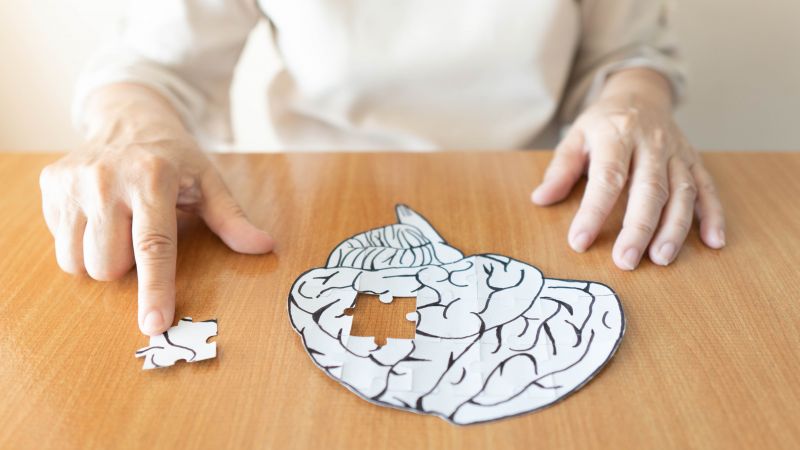
Alzheimer’s disease does not affect only memory. It also changes perception, orientation, and responses to the environment, while emotional memory, rhythm, light, touch, and scent remain preserved for a long time. Multisensory stimulation builds on these pathways - a gentle and steady form of support that respects the brain’s current capacities.
What Alzheimer’s Disease Changes
Alzheimer’s disease gradually disrupts short-term memory, learning ability, spatial and temporal orientation, and language functions such as naming, comprehension, and the continuous organization of daily tasks. It also weakens planning, decision-making, and the overall ability to maintain the cognitive structure the brain needs for everyday functioning.
At the same time, emotional circuits and the limbic system remain preserved, as do responses to music, rhythm, and familiar sounds. Sensitivity to touch and proprioception stays intact, along with light-based regulatory mechanisms of alertness. The brain also retains sensory traces connected to past experiences for a long time. These remaining pathways form the foundation of multisensory care.
Why Multisensory Care Works in Alzheimer’s Disease
- Emotions last longer than words. Even in advanced stages, music, scent, or the tone of a voice can evoke a response and create a sense of safety because emotional memory remains preserved much longer than language functions.
- Sensory pathways stay active. Scent, touch, light, and rhythm engage brain regions that Alzheimer’s disease affects only at later stages, making them a natural pathway for regulation and connection.
- Many difficulties are not cognitive, but sensory. Agitation, anxiety, restlessness, or refusal of care often stem from overstimulation or, conversely, understimulation of the nervous system.
- Rituals stabilize daily structure. Simple, repetitive sensory cues help the brain orient itself and reduce chaotic states, especially in the evening when the system is most vulnerable.
How Multisensory Care Helps in Everyday Life
- Supporting orientation: morning light increases alertness; warm evening light calms the system. Simple light cues help the brain orient more easily.
- Calming through the body: pressure techniques, proprioception, and a zero-gravity position help regulate the nervous system when language and reasoning are no longer accessible.
- Activating memories: scents bypass damaged language centers and reach emotional memory. They can restore connection and strengthen the sense of identity.
- Reducing agitation: a combination of light, slow music, and gentle tactile stimulation effectively reduces evening restlessness, anxiety, and disorientation.
How We Use Multisensory Stimulation at Light Brains
At Light Brains, we work from the principle of gentle, non-intrusive neurostimulation:
-
photobiomodulation (e.g., 40 Hz gamma for activation, alpha frequencies for calming)
-
hydrosols and very subtle essences matched to the client’s sensitivity
-
proprioceptive and tactile regulation
-
sound and vibrational elements
-
stable, visually clean environments
Our goal is not intensity, but coherence. The Alzheimer’s brain responds best to small, carefully chosen inputs.
What It Brings to Caregivers
Multisensory care brings caregivers fewer emotional fluctuations, calmer evenings, better cooperation during hygiene routines, and improved sleep. It strengthens the relationship, even when words are fading and language is no longer the main channel of connection.
It offers another way to communicate - through light, touch, and rhythm, which remain understandable to the Alzheimer’s brain the longest.
When Language Fades, Presence Remains
Alzheimer’s disease does not change the essence of a person. It changes how the brain receives and organizes the world around it. Multisensory stimulation respects this shift. It creates space for calm, connection, and orientation even as speech and memory gradually fade. It is a return to what is simplest and most truthful - to presence, which can be felt.
Part of the Series: Multisensory Care and Neurodegeneration
→ Introduction: Multisensory Care and Neurodegeneration
→ Alzheimer’s Disease and Multisensory Stimulation
→ Frontotemporal Degeneration and Emotional Processing
→ Parkinson’s Disease and the Rhythm of the Body
→ Vascular Neurodegeneration and Spatial Orientation
→ Multisensory Environments for the Ageing Brain
Recommended Reading
-
Livingston, G., Huntley, J., Sommerlad, A. et al. (2020). Dementia prevention, intervention, and care. The Lancet Commission. → Overview of effective non-pharmacological interventions and supportive strategies in dementia care.
- van der Steen, J. T., Smaling, H. J. A., van der Wouden, J. C. (2018). Music-based therapeutic interventions for people with dementia. Cochrane Review. → Evidence on the positive effects of music on emotional stability and agitation.
- Jimenez-Ponce, F., et al. (2022).Sensory stimulation for older adults with dementia. Journal of Alzheimer’s Disease. → Research on the impact of light, scent, and tactile stimulation on orientation, mood, and quality of life.
- Figueiro, M. G., & Rea, M. S. (2010).Lack of short-wavelength light during the day leads to sleepiness and depression. Journal of Alzheimer’s Disease. → The role of daylight and circadian regulation in neurodegenerative conditions.
- Cohen-Mansfield, J. (2001).The assessment of agitation in elderly persons. International Psychogeriatrics. → Explanation of the relationship between sensory dysregulation and agitation.
This text is part of the Light Brains series on multisensory care, neurodegeneration and nervous system regulation.